
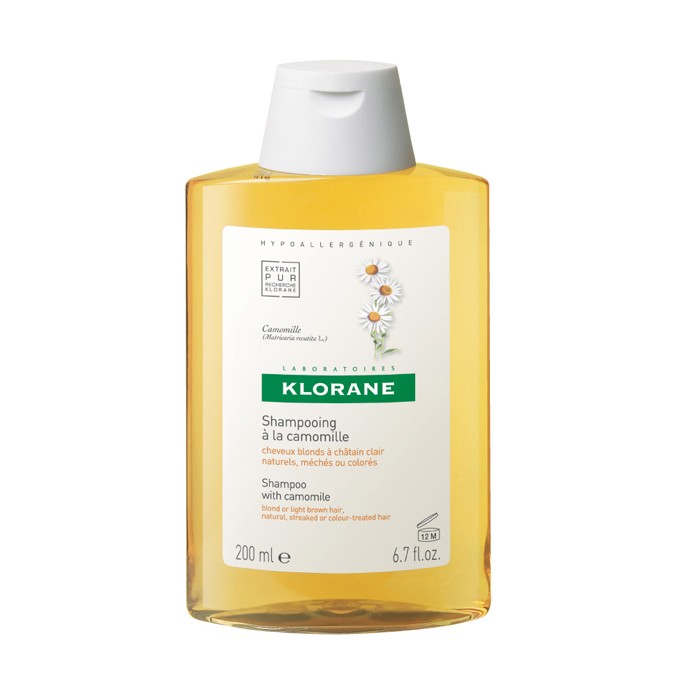
Klorane Chamomile Shampoo
Shampoo is arguably the hardest beauty product to replace with a safer alternative. There is a trick with shampoos - 99% of them either are toxic or don't lather. Safe cosmetics come with a higher price tag. When you need to pour half a bottle of the shampoo on your hair to feel like you are actually washing it, not just making it wet, it gets annoying and it gets expensive.
Another popular flaw with the safer shampoos is that they make the hair very dry and unmanageable.
Klorane Chamomile Shampoo has a decent ingredient list, it lathers well (!) and while it's not particularly moisturising, it won't spoil your hair. It says on the packaging that the shampoo is for blonde hair. My hair is dark brown and I haven't noticed any change in colour after using it for a few months. Maybe it does wonders for blonde highlights - I can't tell, for the rest hair colours - my guess is it's like any other shampoo.
Klorane Chamomile Shampoo is listed in the EWG skindeep and has a score of 3 out of 10, which is low to moderate hazard. It was last updated in 2014 and the ingredient list grew quite substantially since then, including one really nasty ingredient, although not linked to cancer or reproductive toxicity. I would raise the score of the shampoo to 4.
The ingredients now:
Water (Aqua), Sodium Laureth Sulfate, PEG-7 Glyceryl Cocoate, Propylene Glycol, Cocamide MIPA, Lauryl Betaine, Chamomilla Recutita (Matricaria) Flower Extract, Citric Acid, Disodium EDTA, Fragrance (Parfum), Hydroxypropyl Guar Hydroxypropyltrimonium Chloride, Methylisothiazolinone, Phenoxyethanol, Polyquaternium-7, Sodium Benzoate, Tetrasodium EDTA.
There are 7 ingredients in this list that have a score above 2 in Skindeep, i.e. represent a hazard.
- Fragrance has a score of 8 which makes it high hazard. It's linked to allergies, irritation (skin, eyes, or lungs), organ system toxicity (non-reproductive). It's a dirty ingredient but not linked to cancer or reproductive toxicity.
- Sodium Laureth Sulfate has a score of 3 which makes it low to medium hazard. Linked to allergies, irritation and prgan system toxicity, not reproductive, not cancer. It's an alright ingredient.
- PEG-7 Glyceryl Cocoate has a score of 4 which makes it moderate hazard. It's linked to organ system toxicity (non-reproductive), and owes its relatively high score to enhancing skin absorption for other dirtier ingredients to get introduced into our bodies.
- Propylene Glycol has a score of 3, low to moderate hazard. Linked to allergies and immunotoxicity, not cancer/reproductive toxicity. It's an alright ingredient.
- Methylisothiazolinone has a score of 7, high hazard. It's a widely used preservative. It has been associated with allergic reactions and immunotoxicity. It's a dirty ingredient, but it's not linked to cancer and reproductive toxicity.
- Phenoxyethanol has a score of 4, moderate hazard. Linked to allergies and irritation, not cancer/reproductive toxicity. It's a so-so ingredient.
- Sodium Benzoate has a score of 3, low to moderate hazard. Linked to organ system toxicity, not cancer/reproductive toxicity. It's an alright ingredient.
The rest of the ingredients have a score of 2 or less which makes them good non-toxic ingredients.
As you can see, the shampoo is not the cleanest product in the world, but far better than most. It feels like an alright shampoo, it lathers and does everything a shampoo is supposed to do, it's easy to buy - Klorane is a common enough brand, and while it's not the cheapest shampoo out there, it's much more affordable than many alternatives.